
Messaging
One-to-one and group messaging across the local network, with read receipts and typing indicators.
The product
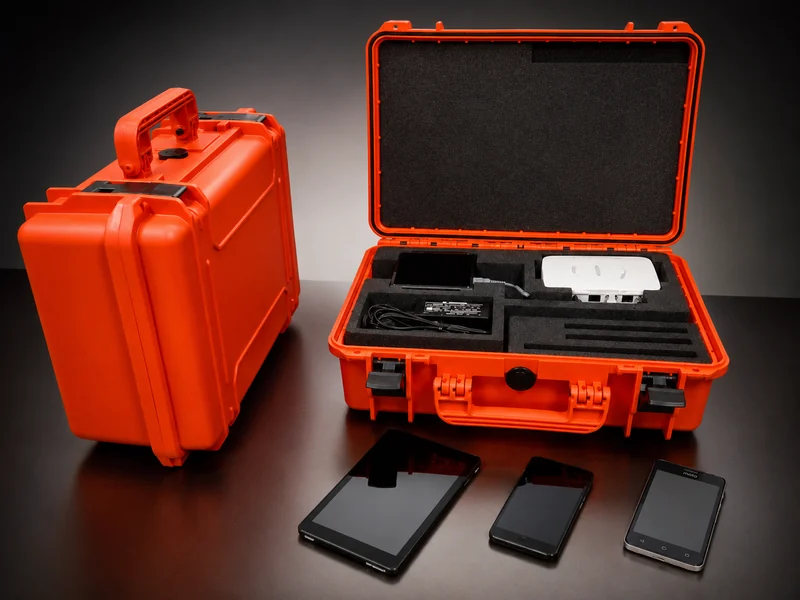
A rugged, self-contained communication kit ready for off-grid deployment. Radio, computing, power and antenna in one carry-along case — a local network for a whole team or community.
One-to-one and group messaging across the local network, with read receipts and typing indicators.
WebRTC-based encrypted calling for individuals and groups, with adaptive bandwidth handling for weak links.
Posts, comments and media sharing scoped to the local network, so a community can coordinate without the public internet.
One-touch distress signalling with GPS location, photo and sensor data attached, and multi-user alerting for team coordination.
Dedicated channels for critical information, so emergency updates reach everyone on the local network at once.
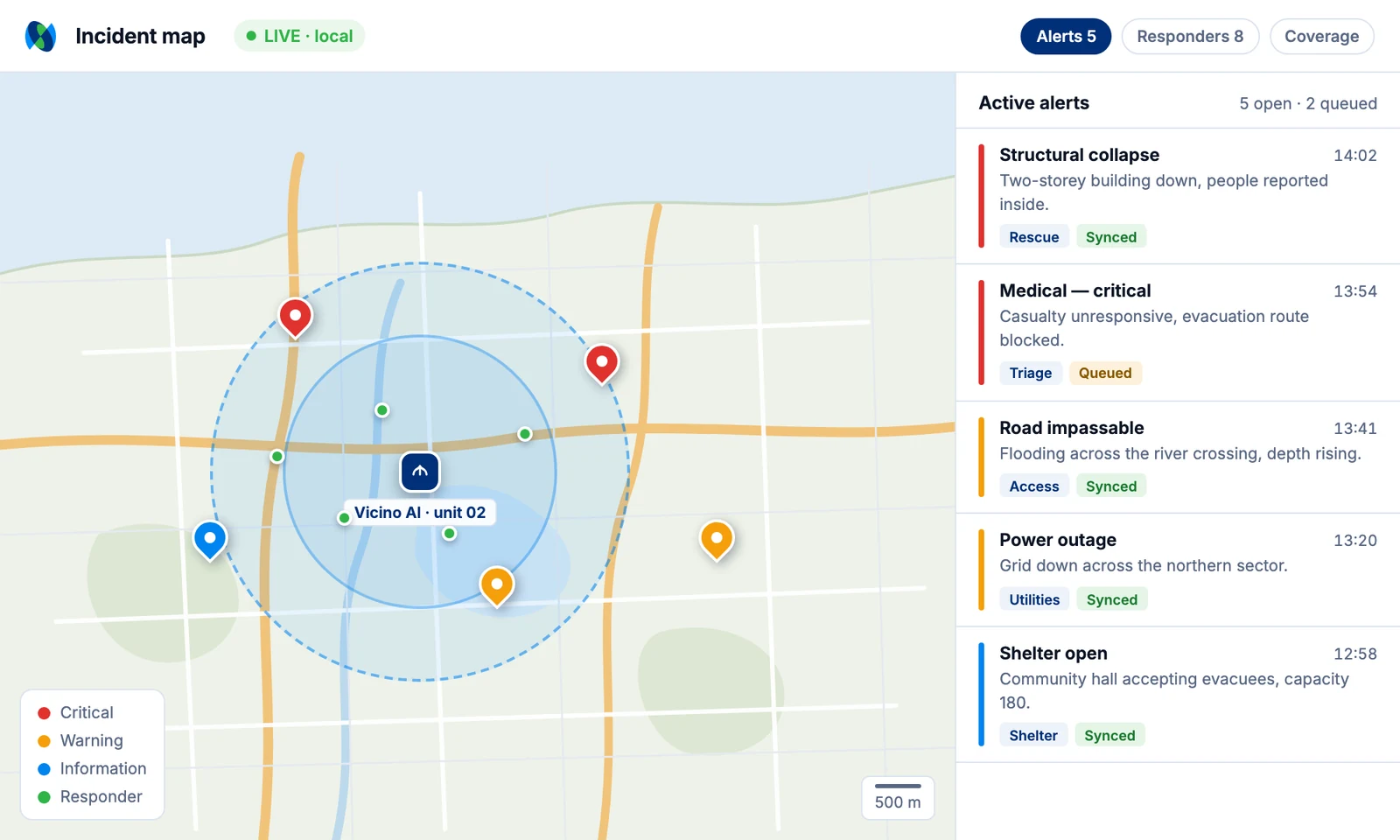
Map-based tracking of alerts, users and incidents for navigation and coordinated disaster response.
Structured reports — damage, search and rescue, activity — with a timeline view and synchronisation to external command systems.
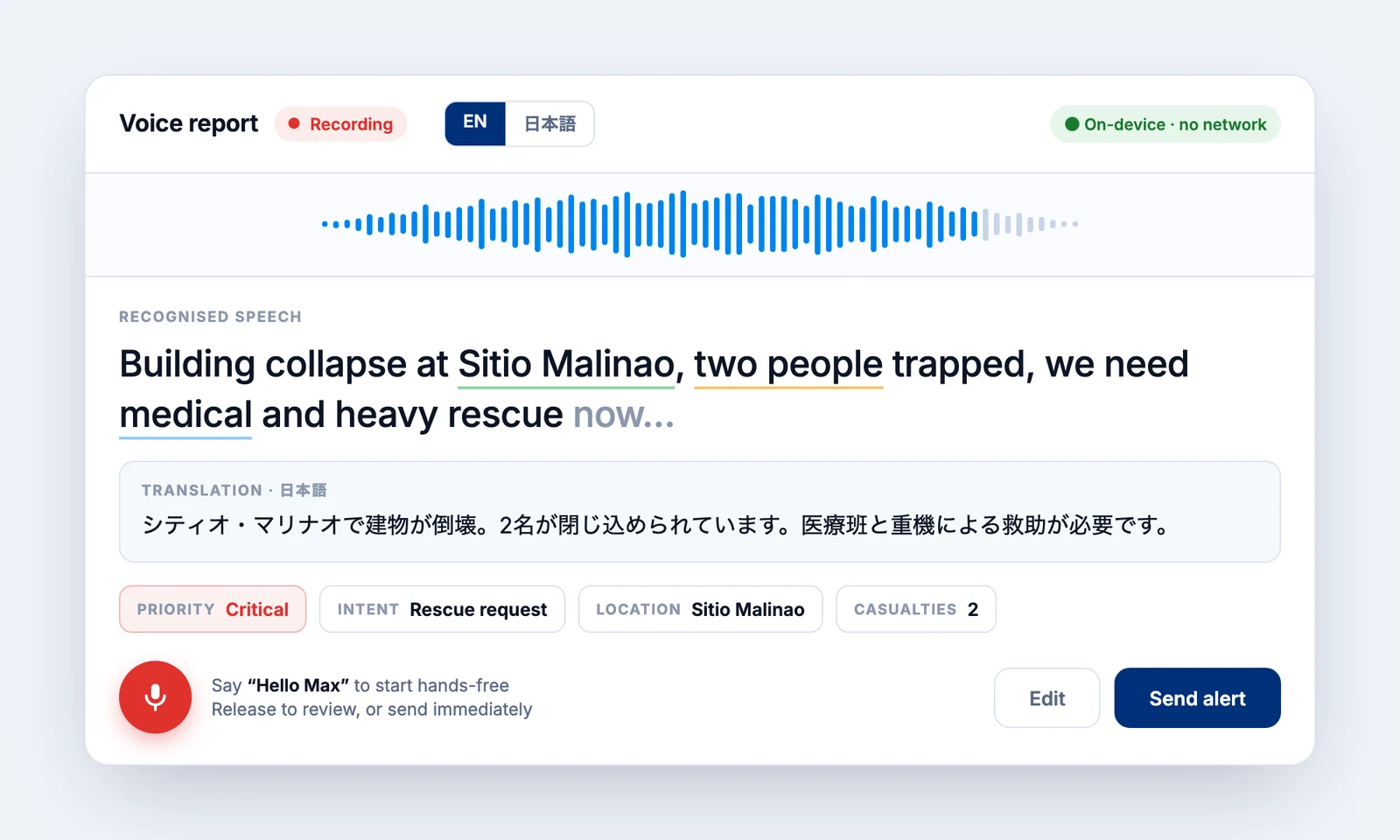
Speech and language processing run on the unit itself, so they keep working with no internet connection at all.
Say "Hello Max" to wake the assistant, then speak natural commands — raise an alert, send a message, call base. Vital when hands are busy, it is dark, or a device cannot be safely held.
Spoken words are transcribed automatically across multiple languages and accents, with noise handling for loud environments.
Incoming messages are read aloud in a natural voice, so users stay informed without looking at a screen.
A spoken message can be transcribed, sent over long-range radio, and read aloud at the other end — voice-driven communication with no network and no internet.
Works across languages, identifies which one is being spoken, and translates live — so responders, international teams and residents can work from the same message.
Recognises urgent requests and commands within incoming traffic, so critical messages stand out instead of scrolling past in a busy feed.
Flags distress and high-emotion messages for priority attention — a triage signal when volume is high and time is short.
Automatically picks out names, places and key details from messages, turning free-form reports into structured, searchable information.
Power is the first thing to run out in a remote deployment. Vicino AI solves that with a combined solar-and-battery design, so a unit stays online far from any electrical socket.
Range is determined by the radio hardware, not by the platform. Because radios attach externally, units can be fitted with locally type-approved hardware for each market.
| Radio type | Range | Best for |
|---|---|---|
| Handheld walkie-talkie | 421 m measured · ~500 m max | Lowest cost; stable two-way messaging for a local team |
| Amateur (HAM) radio | ~3 km expected | Wide-area coverage across a barangay or worksite |
| LoRa module | 1,180 m+ validated | Efficient structured data and alerts over long distances |
Walkie-talkie link rate
1,200 bps (AFSK1200) ≈ 150 B/s
LoRa peak throughput
≈ 177 B/s
Largest message reassembled
1,859 B
Integrity
Per-packet verification; corrupted data discarded
Faster computing
Higher CPU and memory for demanding local workloads.
Extended storage
Up to 2 TB of local storage for media-heavy deployments.
GPU for AI
GPU acceleration for heavier on-device inference.
Long-range Wi-Fi
Extended wireless coverage, subject to local regulations.
Solar panels
Sustainable power for indefinite off-grid operation.
Larger power backup
Extended battery capacity for longer outages.
Point-to-point range extenders
Increase coverage area and link distance between units.
Service integrations
Moodle for education; SIP4D for Japanese disaster information exchange.
We run live field demonstrations tailored to your environment — your terrain, your failure modes, your team.